


You're probably wondering how I ended up here. The club is buried in the dirt, a solid two feet short of the ball, which is still on the tee, completely untouched. That's not a near miss. That's a full, committed swing at a patch of grass. Because I'm just not good. If you want to understand FORE REAL Golf, this is the right place to start. But it goes back a lot further than this swing.
How it Started
Once upon a time, golf was a game I knew nothing about. It was the thing my husband, Jason, disappeared into for six or more hours at a time. Then in 2015 we bought a house on a golf course, and I watched a steady stream of people doing it all day, every day (rain or shine) in our backyard.
But not me. I had two kids under two, and on the long list of things I wanted to do with my free time, golf wasn't one of them.
For years, I had zero interest. Then in 2022, Jason talked me into couples golf. So I grabbed something cute from the pro shop, borrowed a set of demo clubs, and "played" golf.
I'm convinced the bottomless wine and good company were the real draw. We played four-person scrambles in eightsomes, and I spent most of the night socializing, drinking, and swinging the club whenever my team told me to, in whatever direction they pointed. Unsurprisingly, I was awful. But the belly laughs with my friends made it genuinely fun, so I had no objection when Jason bought me my own set of clubs. Apparently, I was a golfer. A couples golfer.
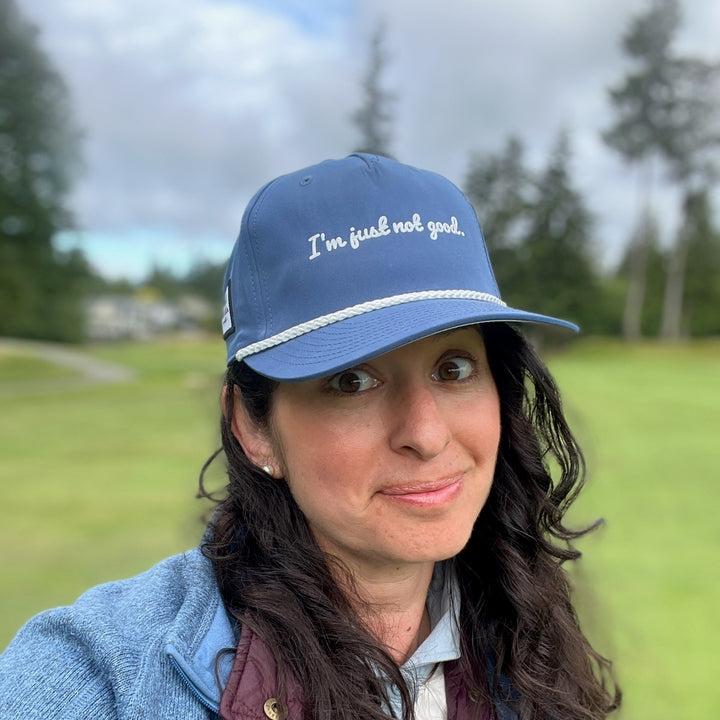
Then in 2024, after 17 years at Amazon, I decided the antidote to living to work was, of all things, golf.
It's outside. It forces you to slow down and be patient. There's nature and wildlife and beauty everywhere you look. So I made the leap from couples golfer to solo golfer.
And I did not ease in. I joined the ladies league: a structured, more-than-weekly, genuinely competitive operation where I had to establish an actual handicap. This was golf "for real," and nothing like couples night. Playing every shot yourself, in front of strangers who take the game seriously, is a lot harder than swinging on your turn while your friends do the real work. No team to hide behind. No wine to blame.
My fellow members were, on average, twenty-plus years older than me, mostly retired, and far more experienced. They all knew each other and played together regularly. I was the random fourth, standing on the first tee in full golf gear, looking like I knew exactly what I was doing. Then I'd swing, and I could practically hear the group thinking: "Nope." "Yikes." "This is going to be a long nine holes."
Here's the part that still gets me. The game I had zero interest in? Now I sneak out after the dinner dishes are done to squeeze in one hole before dark. Just one. Because maybe this is the hole where I finally make par. I'm still not good. But I'm obsessed with the idea that I might actually get better. Isn't that basically the definition of golf?
How it's Going
Everyone in my family golfs. My daughter can outdrive most of the women in my ladies league and carries a respectable 34 handicap. My son reads putts like he caddies for a pro and sits comfortably at 28. My husband is a genuinely humble golfer who doubles as our coach and cheerleader. His handicap is 2.
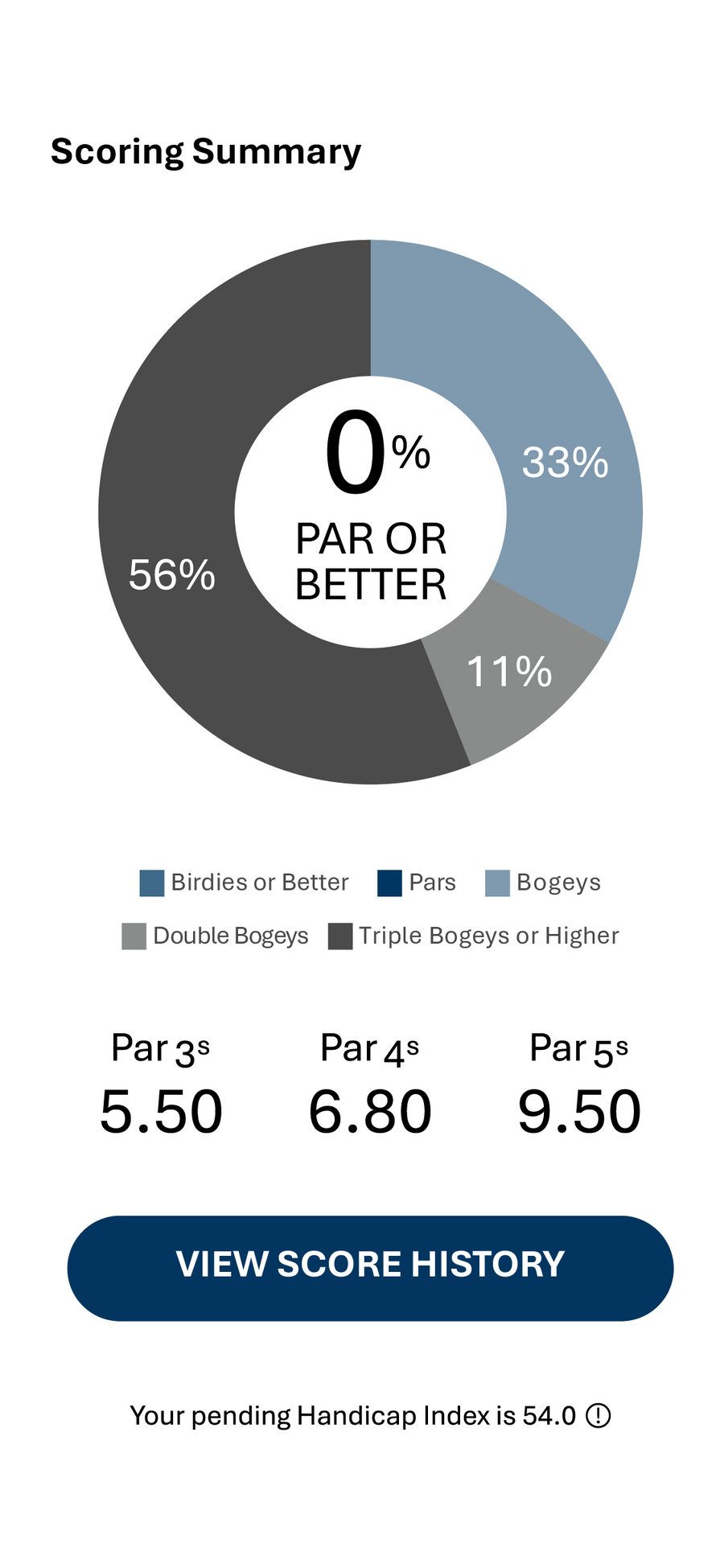
I am, by far, the worst of us. My kids discovered the USGA post-round stats screen, and they're a little too pleased to have the receipts. They think it's hilarious that more than half my holes are usually triple bogey or worse, and they laugh out loud at the number in the middle: par or better, zero percent.
Though on a good day it can reach 11%. (That's one par. Out of nine.)
We get out together at least once a week, and every round is an opportunity for new design concepts. My rule is simple: if I hear it more than once, it probably belongs on a hat. I hear this one several times a round: "That's exactly where you were aiming."
It would be rude if it weren't true. I deny it anyway. Nobody aims for a bunker or a tree, so something else is clearly to blame. The ball has a mind of its own. The wind. My club. The pond that wasn't there a second ago. Or, the simplest explanation: I'm just not good…
Why we Started FORE REAL Golf
When I started golfing, I was honest about my game but embarrassed by it. Saying my handicap out loud felt like something to apologize for. So I did, constantly.
Then five simple words changed everything for me: "You're just not that good." Jane, the leader of our club's new-to-golf program, passed it along. Someone had once given her that line, and now she was giving it to me.

Not as an insult. As permission. Like a "stop worrying — what did you think was going to happen out there?" kind of thing. It freed me almost instantly. So I leaned all the way in and made my first hat: "I'm just not good." Then I wore it on the course.
The hat resonated. It said something honest before I had to, and it cut through the awkward part of golf. That feeling, of being let off the hook and not alone, told me there was something here.
So I got curious. How many of us "not good" golfers are actually out there? I looked it up.
In 2025, a record 48 million Americans played golf, and the National Golf Foundation forecasts it's on its way to 50 million. That growth is coming from beginners and casual players who are out on the range, the simulator, and Topgolf. They are playing for fun, not chasing a tour card. More than 3 million carry an official USGA Handicap. The other 45 million don't track a score.
That's who we built FORE REAL Golf for. If you're not that good, and fine with it, you're one of us.